
The Agrarian Fall
In part one of Planet Of The Barbarians: reconsidering humanity’s greatest mistake.

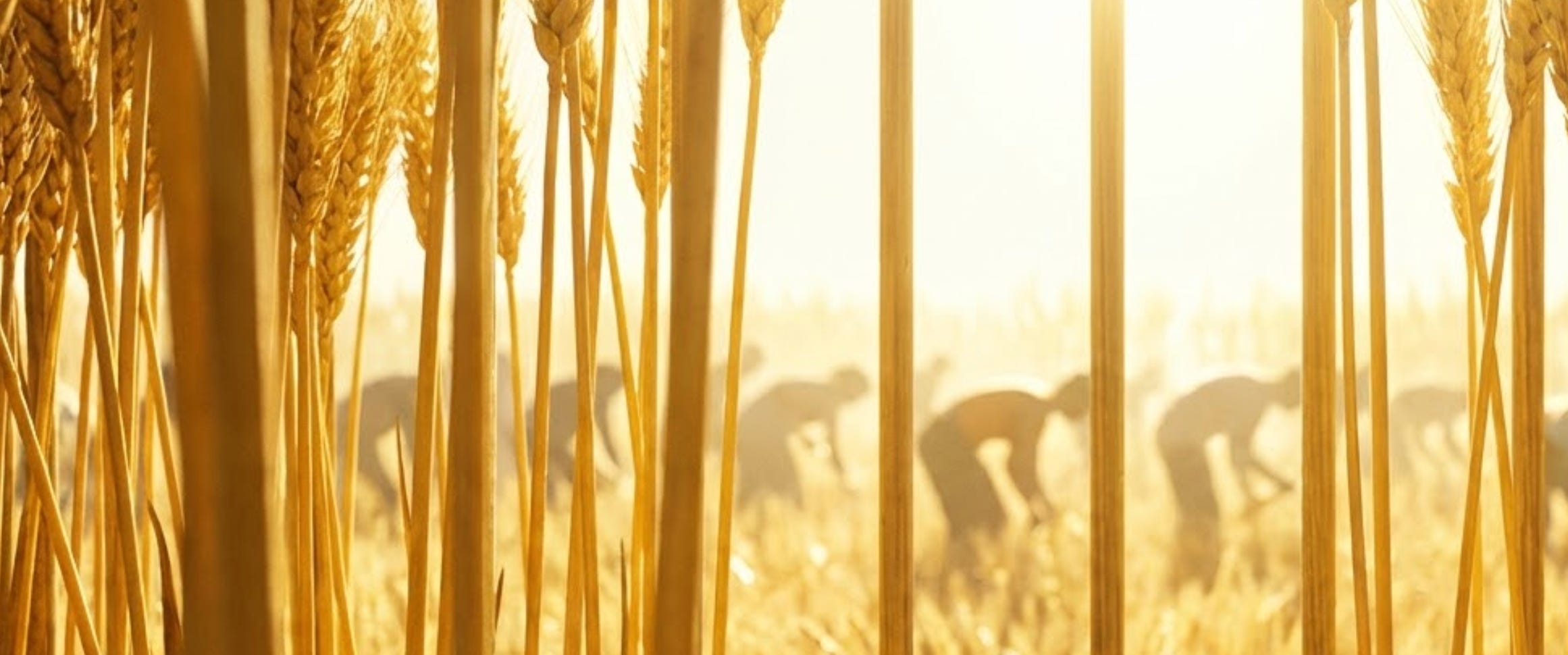
In the sweat of thy face shalt thou eat bread.
So decrees the God of the Old Testament in the third chapter of Genesis, as he exiles Adam and Eve from Eden. We usually read the Fall as a moral parable—the introduction of mortal sin, the first cleavage between divine will and human action. But there is something puzzling about the specific punishment handed down to Adam. God curses the ground itself, warning that it will bring forth “thorns and thistles,” and sentences humanity to a diet of bread—a food universally associated with agricultural societies organized around cereal grains. As a punishment for tasting the forbidden fruit, God sentences humanity to a life of farming.
The specific nature of the curse aligns with a bleak consensus that has taken hold in anthropological (and Big History) circles over the last few decades. If you’ve read Jared Diamond’s Guns, Germs, and Steel or Yuval Noah Harari’s Sapiens, you know the contours of the argument: the transition to agriculture should not be seen as an ascent to a higher plane of civilization, but rather a colossal downgrade for the average human, at least for the first few thousand years after we adopted it. (I touched on agriculture’s devastating impact on life expectancy in my own book, Extra Life.) In this view, the farmer was not the protagonist of a new era of human progress, but a prisoner of an emerging labor-intensive regime, forced into a lifestyle of toil to produce a taxable monocrop that acted as a vector for zoonotic pathogens and created a terrifying new vulnerability to famine. Harari calls the agricultural revolution “history’s biggest fraud.” The author of Genesis, it seems, got there first.
But the “Fall” into agriculture turns out to be a much more nuanced—and jagged—story than the standard account would have it. Over the past three decades, scholars have identified a massive, unexplained gap in the timeline between the first domestication of crops and the emergence of the first agrarian states, complicating the narrative popularized by authors like Harari and Diamond. If we were expelled from the Garden, it appears we spent several thousand years loitering by the exit.
Strangely enough, the one critical clue that explained the mystery behind that gap wasn’t unearthed at a dig site, or analyzed with carbon dating—it fell out of the sky in the 1960s, ejected from a Cold War spy satellite.
Keep reading with a 7-day free trial
Subscribe to Adjacent Possible to keep reading this post and get 7 days of free access to the full post archives.